
Forest School vs. Traditional Childcare: What’s the Difference?
Choosing an early learning environment involves more than comparing opening hours, locations, or facilities. Parents also want to know how their child will spend the day, what they will learn, and how the experience will support their development.
When comparing forest school vs regular preschool, the biggest difference is not simply that one involves more time outside. Forest School uses nature as part of the learning environment, giving children space to explore, ask questions, solve problems, and follow their curiosity.
At Poplars, our Canberra Forest School program combines child-led exploration with guidance from experienced early childhood educators.
What Is Forest School?
Forest School is a nature-based preschool approach where children spend meaningful time learning in natural outdoor environments.
Learning Starts With Curiosity
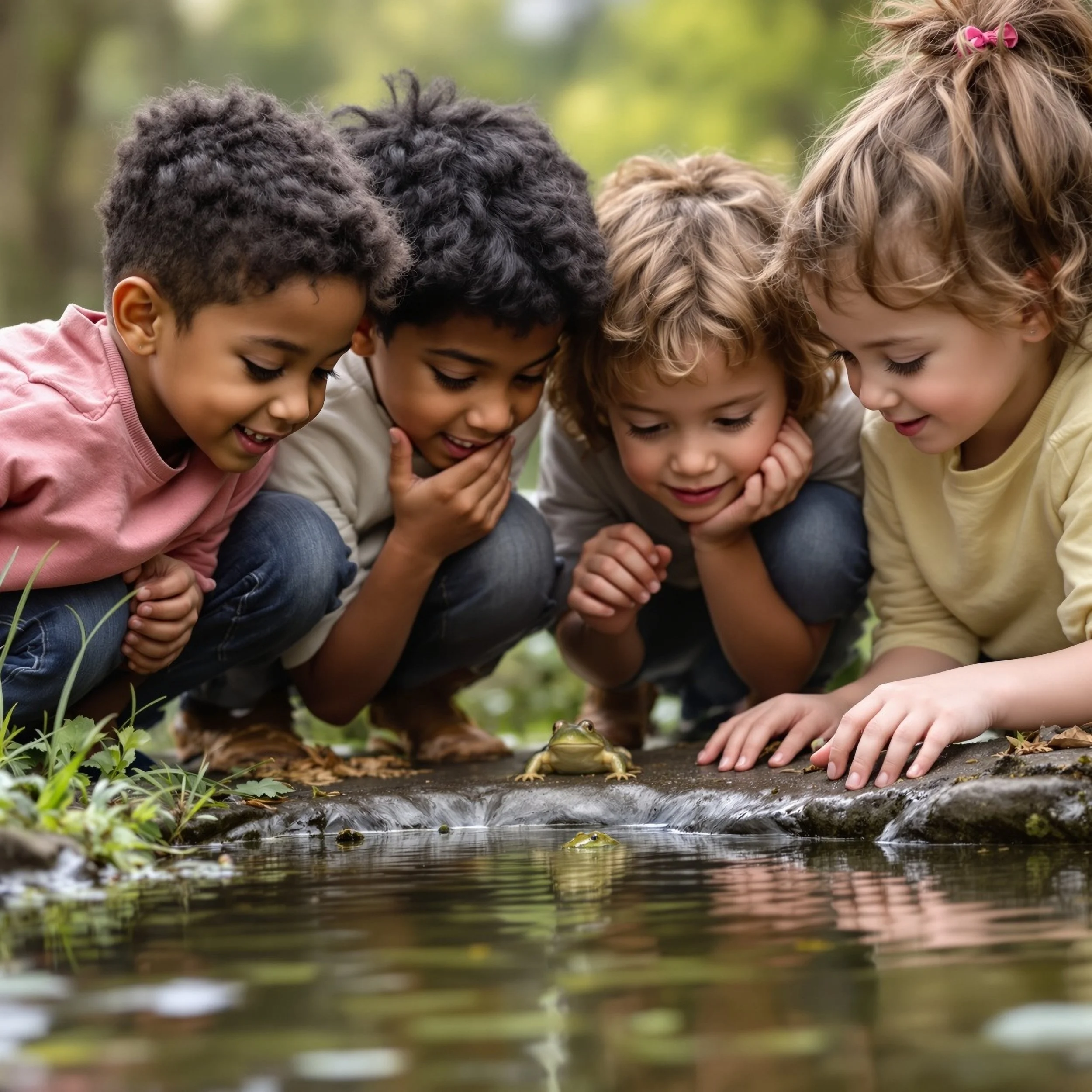
Rather than following a set activity every time, children are encouraged to notice what interests them. They might investigate insects, build with fallen branches, follow tracks, or explore how rain changes the ground.
Educators are still actively involved. They observe, ask questions, introduce ideas, and help children take their thinking further.
Forest School benefits commonly include:
child-led exploration
open-ended play with natural materials
regular contact with changing outdoor environments
opportunities to make choices and solve problems
The Australian Institute of Family Studies' research on nature play describes nature play as a child-led activity involving elements such as rocks, water, trees, sticks, plants, and uneven landscapes.
Forest School vs. Regular Preschool: What Actually Changes?
Quality early learning can happen both indoors and outdoors. The difference is how heavily the natural environment is used as a place for ongoing learning.
The Learning Environment
In a traditional early learning setting, educators usually create planned indoor and outdoor spaces with toys, equipment, books, and learning materials.
Forest School adds another layer by allowing children to learn directly from an environment that naturally changes from day to day.
That can mean:
balancing across uneven ground
observing insects or native plants
building with sticks and natural materials
noticing weather and seasonal changes
creating games without fixed instructions
The environment itself becomes part of what children investigate.
What Can Children Gain From Nature-Based Learning?
Nature-based learning is not only about fresh air or physical activity. It can give children different ways to practice skills they will continue using as they grow.
Resilience and Problem-Solving
A fallen branch may become something to climb over, build with, or investigate. Children can try an idea, adjust it, and try again.
These small challenges can support:
confidence when approaching unfamiliar situations
decision-making
persistence when something does not work immediately
creative problem-solving
Physical Skills and Self-Regulation
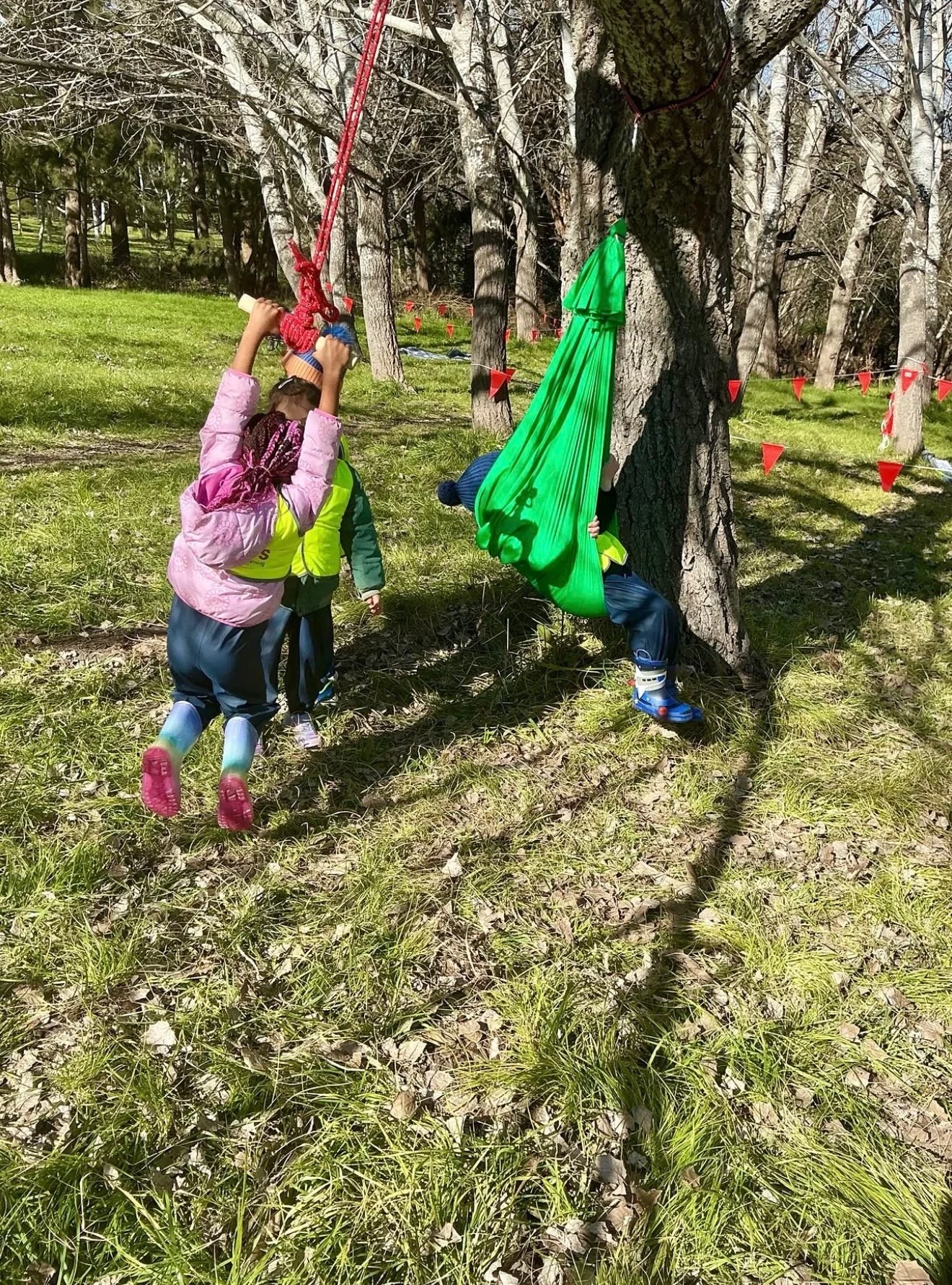
Natural environments also provide varied movement experiences. Walking over uneven ground, balancing, carrying materials, and climbing can challenge the body differently from flat indoor spaces.
Research reviewed by the Australian Institute of Family Studies also suggests that nature play can support children's social and emotional wellbeing, resilience, confidence, and emotional self-regulation.
But Is Forest School Safe?
Parents may naturally wonder how safety is managed when children are climbing, exploring bushland, or moving through less predictable environments.
Managed Risk Is Different From Unmanaged Danger
Forest School does not mean allowing children to take unnecessary risks. Educators assess the environment, set appropriate boundaries, supervise children, and consider their age and abilities.
At Poplars, Forest School days begin with discussions about boundaries, wildlife, bush safety, and equipment before children head outdoors.
Parents who want to understand this approach in more detail can also read about how managed risk supports children's development.
[ADD Article Link 2 - Risky Play]
Does Forest School Still Prepare Children for School?
Yes. Nature-based learning and school readiness can work together.
School Readiness Goes Beyond Letters and Numbers
Starting school also requires children to communicate, manage emotions, work with others, solve problems, and become increasingly independent.
Forest School can provide opportunities to practice skills such as:
listening and communicating with others
making decisions
concentrating on an activity
collaborating with peers
adapting when plans change
developing confidence and independence
Australia's Early Years Learning Framework guidance from ACECQA supports play-based learning alongside intentional teaching. It also recognises indoor and outdoor environments as places where children can develop agency, curiosity, creativity, and problem-solving skills.
For families looking for nature-based early learning ACT, this means outdoor exploration does not have to come at the expense of purposeful learning or preparation for the next stage.
Is Forest School Worth It for Your Child?
There is no single early learning approach that suits every family. The better question is whether the learning environment matches what you want your child to experience.
Consider What Matters to Your Family
A Forest School program may be a strong fit if you value opportunities for your child to:
spend regular, meaningful time outdoors
explore their own interests
develop independence
solve real-world problems
build confidence through manageable challenges
learn through movement, observation, and discovery
Seeing the approach in practice can also make the decision much easier.
See Forest School Learning in Action
Our Forest School program is easier to understand when you can see how children and educators use the environment together.
Poplars integrates nature-based learning into its early learning approach at Holt and Jerrabomberra. Explore the Poplars Forest School framework or book a centre tour to see how child-led inquiry and outdoor learning come together in a real day at Poplars.
